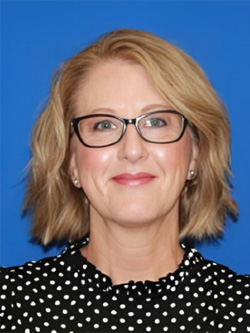
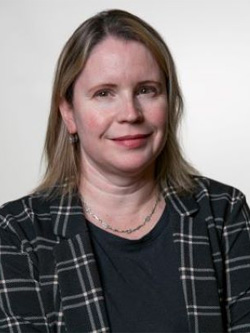
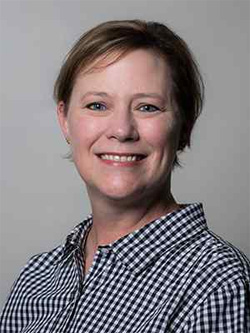
Amy Chesser

The Department of Public Health Sciences is proud to announce the appointment of Dr. Amy Chesser as the new director of graduate programs. Chesser has been a faculty member at Wichita State for 11 years and brings extensive experience in public health education, research and leadership. Her teaching and research passions include health communication, health literacy, public health, older adults and health disparities.

In her new role, Chesser will lead the Master of Health Administration and aging studies programs, with a vision to foster their continued growth and success. She is committed to preparing students for impactful careers in healthcare and supporting the faculty who teach in the graduate programs. The Department of Public Health Sciences looks forward to her leadership in advancing the graduate programs and supporting student success.

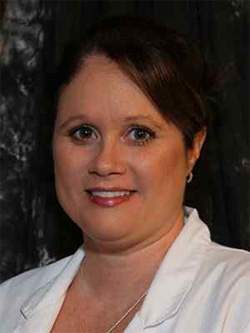
Dr. Erin O'Bryan

Erin O’Bryan, Assistant Professor in the Department of Communication Sciences and Disorders, published “Person-Centered Stories on the Main Stage in Intervention: Case Examples From the My Story Project, Aphasia! This Is Our World, and Aphasia-Friendly Reading” in American Speech-Language-Hearing Association (AHSA Wire) April 1.

Abstract: Purpose: Researchers working in the Life Participation Approach to Aphasia (LPAA) framework are beginning to recognize the value of supportive co-constructed storytelling for people with aphasia. Supported storytelling facilitates identity reconstruction that is part of rehabilitation as defined in the LPAA and the Living with Aphasia: Framework for Outcome Measurement. This clinical focus article reviews the therapeutic value of using co-constructed storytelling in clinical practice and describes how this was done in the My Story Project, Aphasia! This Is Our World, and Aphasia-Friendly Reading. These projects used co-constructed storytelling in intervention with people with aphasia in university and support group settings. Three case examples are presented, including sample therapy goals and documentation. Co-constructed person-centered storytelling has been used in clinical projects and has been shown to have immense value in rehabilitation for improving quality of life for people with aphasia. Conclusions: Co-constructed stories can provide a powerful opportunity for targeting life participation, identity, and environmental factors, while simultaneously targeting language. Clinicians are encouraged to consider incorporating the use of co-constructed person-centered storytelling in clinical practice. Guidance is offered for preparing for storytelling intervention sessions and documenting these sessions as billable, skilled services.

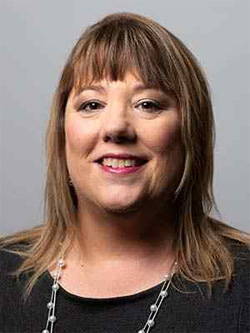
Imran Musaji

Dr. Imran Musaji, Assistant Professor in the Department of Communication Sciences and Disorders, published “Our CSD Legacy of Advocacy, and Why We Need to Be More Engaged Than Ever” in LeaderLive, online journal of American Speech-Language-Hearing Association March 5.

Abstract: The communication sciences and disorders professions have a long history of actively pushing the passage of legislation to support people with disabilities.

Imran Musaji and Erin O’Bryan, Assistant Professors in the Department of Communication Sciences and Disorders; and Aaron Bowen, associate professor and instruction and research services librarian in University Libraries, published “Approaches to Training Speech-Language Pathologists to Work With People With Aphasia: A Systematic Review” in American Journal of Speech-Language Pathology May 6.

Abstract: Purpose: The aim of this systematic review was to analyze the published research on training approaches for preparing current and future speech-language pathologists (SLPs) to work effectively with people with aphasia (PWA). The review addresses key questions regarding the described training approaches, their key features, research quality, and efficacy. Method: The review was conducted in accordance with Preferred Reporting Items for Systematic Reviews and Meta-Analyses guidelines and registered with International Prospective Register of Systematic Reviews (CRD42024453742). The literature search spanned nine databases. Eligibility criteria included peer-reviewed publications in English that reported on training programs involving current or future SLPs working with PWA. Studies were assessed for research quality using the American Speech-Language-Hearing Association’s (ASHA’s) levels of evidence framework. Narrative synthesis was used to identify key features in the training programs. Results: A total of 920 citations were identified, with 50 studies meeting the inclusion criteria for analysis. Included studies represented a broad range of training approaches, research designs, and research quality. The 50 studies fell into ASHA levels of evidence Ib, IIa, IIb, III, and IV. Statistical meta-analysis was not possible because of variability in research design and outcome measures, but the studies revealed statistically significant findings relevant to the question of what makes training effective for preparing clinicians to work with people with aphasia. Conclusions: The current literature related to training of clinicians to work with PWA is heterogeneous in approach, outcome metrics, and methodological quality. There is evidence supporting several recommendations for training clinicians including integrating direct interactions with PWA during training, combining didactic and experiential learning, and incorporating reflective practices. Overall, the review highlights the need for well-described evidence-based training standards for speech-language pathology students working with PWA. Future research should aim to develop and validate comprehensive training guidelines to improve care quality for individuals with aphasia.

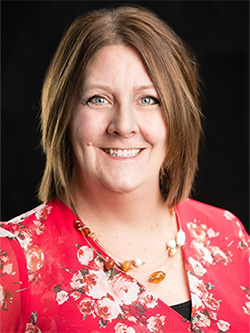
Jennifer Thornberry

Jennifer Thornberry, DNP, APRN, FNP-BC, Assistant Professor in the Ascension Via Christi – Wichita State University School of Nursing, was featured in:

Chris Dudley, Assistant Clinical Professor and Director of Admissions/Fellow in the Department of Physician Associate, was featured in “Wichita State University’s pioneering physician assistant program helps meet health care demand” in KAKE.

Brian Ray

Brian Ray, Clinical Professor in the Department of Communication Sciences and Disorders, was recognized with Speech-Language Pathologist of the Year from Kansas Speech-Language-Hearing Association.

Dr. Erin O'Bryan

Dr. Erin O’Bryan, Assistant Professor in the Department of Communication Sciences and Disorders, was featured in “Engaging Care Partners, Sharing Stories, and Waffle Night Celebrations: A Conversation with Harold Regier and Erin O’Bryan” in Aphasia Access Conversations.

Dr. Dean Elledge

Dr. Dean Elledge, Program Director and Specialist Prosthodontist in Advanced Education in General Dentistry, was featured in “From Kansas City to Wichita: A Dentist’s Journey to Fulfillment” on the Dr. Phil Klein Dental Podcast.

Dr. Chris Mar

Dr. Chris Mar, AEGD Faculty and General Dentist in Advanced Education in General Dentistry, was recognized with 2024 Outstanding Dentist of the Year from Oral Health Kansas.