Are you interested in becoming a dental hygienist? Join an information session at 3:30 p.m. Friday, Oct. 10 in 110 Ahlberg Hall. Learn about the dental hygiene profession, get an overview of WSU’s dental hygiene program and get details about the application process and academic counseling. Program faculty will also be available to answer your questions.

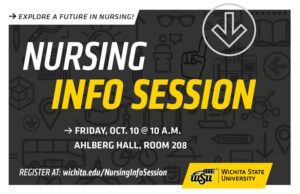
Explore a future in Nursing! Nursing Info Session Friday, Oct. 10 at 10 a.m. Ahlberg Hall, Room 208. Register at wichita.edu/nursinginfosession

Thinking about a career in nursing? Join the nursing program for an information session at 10 a.m. Friday, Oct. 10 in 208 Ahlberg Hall. Learn more about the BSN programs at Wichita State, admission requirements and have the opportunity to ask questions directly to nursing faculty.

Dental Hygiene Clinic at Wichita State. Open to the public and WSU community. Cleanings, sealants, x-rays, gum treatment and more.

The Dental Hygiene Clinic at Wichita State is open to the public and accepting new patients. The clinic offers a wide range of low-cost preventative, therapeutic and educational services, including cleanings, dental sealants, X-rays, individualized oral health instruction and more. For more information visit wichita.edu/DHclinic.

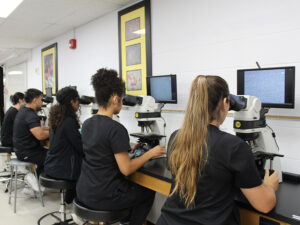
The Department of Medical Laboratory Sciences (MLS) is hosting an information session from noon to 1 p.m. Friday, Sept. 26 via Zoom. The session will review career opportunities in the MLS profession, an overview of the MLS program at Wichita State and the application process.

Medical laboratory scientists play an important role in the healthcare system, performing scientific testing on samples to determine appropriate treatment options for patients. The MLS program prepares graduates for a high-demand career as medical laboratory scientists.

Benjamin-Kirby

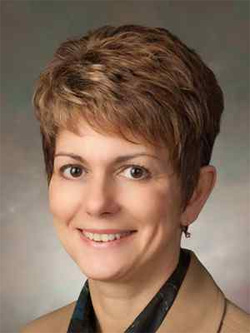
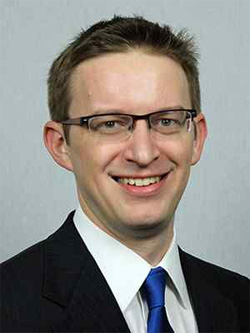
Dr. Benjamin Kirby, Associate Professor and Undergraduate Program Coordinator in the Department of Communication Sciences and Disorders, published “Psychoacoustic assessment of misophonia” in the Journal of the Acoustical Society of America on Sept. 9, 2025.

The publication was selected as an editor’s pick for the Journal of the Acoustical Society of America electronic letters. Alaina Cunningham, sophomore in audiology, was a co-author of the publication.

Julie Slade

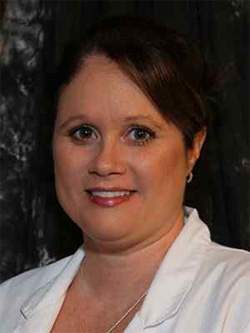
The Physician Associate Program is pleased to announce the appointment of Julie Slade, MS, PA-C, as its new associate program director.

Slade has been a faculty member in the PA Program for the past four years, where she has served as assistant clinical professor and director of clinical development and operations. An alumna of the WSU PA Program, she brings over 30 years of clinical experience, specializing in gastroenterology and hepatology. Her background also includes mentoring students as a preceptor and cultivating strong partnerships with clinical affiliation sites and preceptors.

In her new role, Slade will continue to advance the program’s mission through her leadership and commitment to clinical excellence, supporting the development and success of future physician associates.

Free hearing evaluations Wichita State faculty and staff

The Evelyn Hendren Cassat Speech-Language-Hearing Clinic at Wichita State is offering free hearing evaluations to faculty and staff, available now through the month of October. During the evaluations, a supervised doctoral student will test the patient’s hearing to determine if there is hearing loss and the type and severity of the loss. Hearing evaluations will last approximately one hour. If a patient does appear to have hearing loss, the appointment may last longer.

To schedule an appointment, call 316-978-3289. The clinic is located at the Hughes Metropolitan Complex at the intersection of 29th and Oliver Streets.

Rhonda Williams

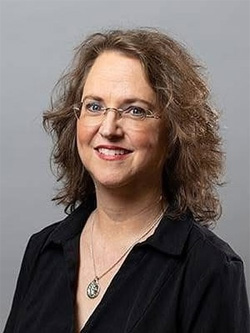
Rhonda Williams, RN-BSN program Coordinator and Teaching Professor – Ascension Via Christi – Wichita State University School of Nursing, published “National RN to Baccalaureate Faculty Forum. (2025). National RN-Baccalaureate Faculty Forum position statement. N. Heywood & R. Williams (Eds.)” in American Association of Colleges of Nursing, Essentials Curriculum Mapping Tools Aug. 1.

Abstract: The National RN-Baccalaureate Faculty Forum (NRFF) recognizes the significance of The Essentials: Core Competencies for Professional Nursing Education (American Association of Colleges of Nursing [AACN], 2021a). The Essentials document guides the concepts, domains, competencies, and spheres of care that RN to Baccalaureate (RN to B) programs must include in their curricula. The NRFF reaffirms that RN to B programs build upon the introductory knowledge, skills, and abilities that are verified through an earned diploma or associate degree in nursing from an accredited/state board-approved program, successful completion of NCLEXRN®, and subsequent RN licensure by a state board of nursing or other nursing regulatory body. The NRFF proposes that RN to B programs continue to reinforce, scaffold, and further develop the knowledge, skills, and abilities measured through the above three components while meeting all competencies outlined in the Essentials (AACN, 2021a).

Brandy Jackson

Brandy Jackson, Undergraduate Program Director/Assistant Educator – Ascension Via Christi – Wichita State University School of Nursing, published “Disability and Accommodation Use in US Bachelor of Science in Nursing Programs” in JAMA Network Open Feb. 20.

Abstract: Introduction: Medical associations’ commitment to advancing disability-inclusive practices has led to data collection on, and a significant increase in representation of, medical students with disabilities.1,2 However, information on disability representation and accommodation use in US nursing programs remains scarce. The lack of data collection on this population impedes the ability to identify barriers, benchmark, and measure progress. To address this gap, we quantified disabilities and types of accommodations used among traditional prelicensure nursing students in US Bachelor of Science in Nursing (BSN) degree programs. Methods: This exploratory cross-sectional study, conducted from April 1 through July 30, 2024, used national data from nursing schools to examine disability and accommodation use in traditional prelicensure BSN programs. Participants were recruited through convenience and snowball sampling from social media, American Association of Colleges of Nursing (AACN) listservs, and the AACN newsletter. US traditional prelicensure BSN programs accredited by the Commission on Collegiate Nursing Education were eligible. Postlicensure and accelerated BSN programs were ineligible. The study was exempted and no consent was required by the University of Michigan institutional review board because we collected aggregate data that belong to the institution. We followed the STROBE reporting guideline. Questionnaires from previous works of the senior author (L.M.M.)1 -3 were adapted from medical to nursing education (eMethods in Supplement 1). The nursing questionnaire collected data on the number of students with disabilities registered with their school’s disability services office by disability category and approved accommodations. Program characteristics, including size, geographic location, private or public designation, and structure of the disability office, were also collected. Schools’ disability resource professionals completed the questionnaire. Descriptive statistics were used to summarize survey results. To account for heterogeneity between schools, random-effects logistic regression models were used to calculate pooled estimates (weighted by sample size) of disability proportions along with 2-sided 95% CIs. Analyses were conducted using R statistical software, version 4.4.1 (R Project for Statistical Computing).

Dr. Heather Henderson, Associate Dean for Research, Compliance and Accreditation/Assistant Professor, Public Health Sciences – College of Health Professions Dean’s Office, was appointed as editor-in-chief for Pedagogy in Health Promotion.