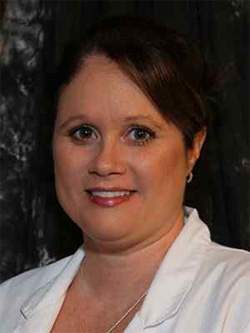
Rhonda Williams

Rhonda Williams, RN-BSN, program coordinator and teaching professor in the Ascension Via Christi – Wichita State University School of Nursing, presented “Empowering RN to Baccalaureate Faculty: Strategies for Implementing the 2021 AACN Essentials” at the National League for Nursing – Educate Conference on Sept. 18, 2025.

Robert C. Manske, professor in the Department of Physical Therapy, presented “Blood Flow Restriction Training for the Upper Extremities” at ASSET Annual Meeting 2025, San Diego, California on Oct. 16, 2025.

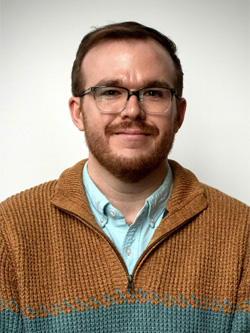
Trevor Nelson

Trevor R. Nelson, assistant professor of musicology in the School of Music, presented “So Long, Farewell: The Musical Politics of Westminster Abbey Independence Services, 1962–1966” at American Musicological Society National Conference in Minneapolis on Nov. 8, 2025.

Description: Spectacle and ceremony are well-understood tools of the British Empire, overwhelming the senses of spectator-participants and enculturating them into a particular worldview. Such scholars as Wendy Webster (2005), Nalini Ghuman (2014), and Sarah Kirby (2022) have analyzed how British colonial forces used music, spectacle, and ceremony to shape understandings of imperial order across the late-nineteenth and early-twentieth centuries, in both the metropole and the colonies. Furthermore, historians have noted ceremonies as key tools in crafting a post-colonial identity across the former British empire (Cannadine 2008, Kaul 2008, Kahn 2008). But what role did these ceremonies play in shaping the people of Britain’s national consciousness during the anticolonial moment of the 1960s?

I answer this question by analyzing music used to mark the independence of British colonies at ceremonial events in London across the 1960s. Using Katie Day Good’s framework for understanding spectacle as a pedagogical tool (2020), I focus on a series of ceremonies hosted by Westminster Abbey, intended to welcome former colonies as independent members of the British Commonwealth. Planned by the Abbey and the British Government’s Colonial Office, these spectacular events took the form of Anglican worship services and featured musical well-wishes to these independent nations. These pieces included hymns and instrumental works that would not feel out of place in the Abbey’s hallowed halls, leading to the ceremonies having a uniform sound, one distinctly British in nature, rather than idiosyncratic approaches highlighting the unique musical qualities of the varying nations. Drawing on materials from the British National Archives and the Westminster Abbey Archives, I reconstruct the questions and debates leading up to the ceremonies for Jamaica (1962), Kenya (1963), and Guyana (1966). I argue that, through music, one hears how the British Government’s desire to control and shape the Commonwealth in their national image led programmers to structure these events to please British attendees, rather than the newly independent nations they were supposedly honoring. By reframing spectacle from this vantage point, this project highlights how music can both support and undermine the crafting of national identity via ceremony.

Andrew Myers, director of scholarships and student services – Dorothy and Bill Cohen Honors College presented “We are all talking gibberish: Communicating with Gen Z Through the Advising Process” at 2025 Kansas Academic Advising Network annual conference Sept. 19, 2025.

Description: Andrew Myers, Director of Scholarships and Student Services in the Dorothy and Bill Cohen Honors College, presented a paper for the Kansas Academic Advising Network (KAAN) annual conference held at Fort Hays State University on Sept. 19. His interactive presentation titled “We are all talking gibberish: Communicating with Gen Z Through the Advising Process” is based on a recent exploratory study of preferred communication among Generation Z students. It invited attendees to evaluate their communication methods and develop ideas for more effective communication. The Kansas Academic Advising Network supports academic advisors through the state of Kansas and serves as a communication network among institutions of higher education for the development of the academic advising profession.

Andrew Myers, director of scholarships and student services in the Dorothy and Bill Cohen Honors College, presented “We are all talking gibberish: Communicating with Gen Z Through the Advising Process” at 2025 Kansas Academic Advising Network annual conference Sept. 19.

Description: Andrew Myers, Director of Scholarships and Student Services in the Dorothy and Bill Cohen Honors College, presented a paper for the Kansas Academic Advising Network (KAAN) annual conference held at Fort Hays State University on Sept. 19. His interactive presentation titled “We are all talking gibberish: Communicating with Gen Z Through the Advising Process” is based on a recent exploratory study of preferred communication among Generation Z students. It invited attendees to evaluate their communication methods and develop ideas for more effective communication. The Kansas Academic Advising Network supports academic advisors through the state of Kansas and serves as a communication network among institutions of higher education for the development of the academic advising profession.

Alyssa Lynne-Joseph, assistant professor in the Department of Sociology, presented “Between the Local and the Global: Clinical Practice Guidelines for Gender-Affirming Care” at Society for the Social Studies of Science (4S) on Sept. 6, 2025.

Jennifer Thornberry, DNP, APRN, FNP-BC, assistant professor in the Ascension Via Christi – Wichita State University School of Nursing, presented “Development of a Standardized Patient Education Program” at Kansas Nurse Educator Conference at Newman University July 17.

Description: In this presentation, the experiences of utilizing the Association of Standardized Patient Educators (ASPE) Standards of Best Practice (SOBP) in the development of a standardized patient education program were described so that other nursing education programs can develop or evaluate their own standardized patient simulation programs. Results from a qualitative study about high stakes standardized patient exams for FNP students were presented with a goal of understanding the student nurse experience in high stakes SP exams.

Rhonda Williams

Rhonda Williams, RN-BSN program coordinator and teaching professor in the Ascension Via Christi – Wichita State University School of Nursing, presented “Overcoming Obstacles: IRB Barriers in Multi-Institution Research Initiatives” at the Western Institute of Nursing Conference April 10.

Description: Rhonda Williams co-authored of poster presentation at the Western Institute of Nursing Conference.

Rhonda Williams

Rhonda Williams, RN-BSN program coordinator and teaching professor in the Ascension Via Christi – Wichita State University School of Nursing, presented about Ascension Via Christi – Wichita State University School of Nursing’s position statement at AACN Essentials Champions meeting Aug. 27.

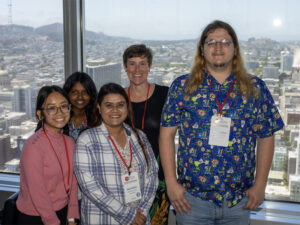
Beck Lab group on top floor of conference hotel overlooking SF.

Dr. Moriah Beck, Talaty Endowed Professor, presented “On the Move, Palladin at the Crossroads of Actin Branching and Bundling” at 39th annual Protein Society Symposium in San Francisco June 26.

Description: Dr. Moriah Beck was selected to give a talk in the “Proteins Moving, and On the Move Inside the Cell” session. Graduating undergraduate student Julie Tran was also selected to give a talk in the undergraduate session. Graduate student Sanju Ghimire and two undergraduate students, Colby Bradford and Sena Welihena, each presented posters. Julie and Sanju were also awarded travel grants by the Protein Society.