Dr. Ali P. Gordon - incoming dean, College of Engineering

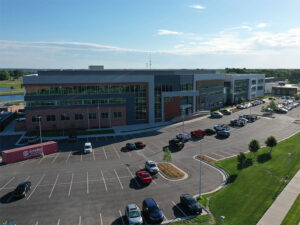
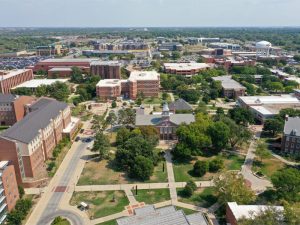
Dr. Ali P. Gordon has been named as the next dean of the Wichita State University College of Engineering, effective June 7.

Gordon currently serves as a professor and the associate dean of graduate affairs at the University of Central Florida’s College of Engineering and Computer Science, a role he took as interim in 2018 before being appointed in 2019. During his tenure, Gordon has overseen over 30 graduate programs and 2,500 graduate students, and he architected the college’s strategic internationalization plan.

“Wichita State University is already a recognized powerhouse for engineering, computing, applied learning and research,” Gordon said. “As we strive for R1 status, the College of Engineering will be a key contributor to the transformation. With our talented students, distinguished faculty, dedicated staff and fully engaged industry partners already in place, achieving a bold new vision for this college is well within our reach. It is a privilege to lead the College of Engineering, and together we will author its next great chapter.”

A Wichita State University student conducts materials research for steel at the National Institute for Aviation Research.

Wichita State University was recently named a partner in a $14 million grant from the National Science Foundation (NSF) to join the NSF Innovation Corps (I-Corps) Great Plains Hub.

The I-Corps program prepares scientists and engineers to extend their focus beyond the laboratory to increase the economic and societal impact of NSF-funded and other basic research projects. The first Wichita State cohort will begin Sept. 15.

“This partnership gives students, faculty, staff and the Wichita community at large the opportunity to explore their idea more practically and learn how to talk to potential customers,” said Sherry (Gegen) Whitson, program director for WSU Strategic Initiatives. “I believe it will help build on our innovation ecosystem.”

Students in their regalia attend fall 2023 commencement.

Wichita State has released the list of the over 1,950 Shockers who graduated in spring 2025. View the list of Kansas graduates and the list of national and international graduates.

Overall, graduates completed a total of 2,122 degrees — 1,430 undergraduate degrees and certificates and 692 graduate degrees and certificates — with 336 honored as cum laude, 425 honored as magna cum laude and 108 honored as summa cum laude.

Additionally, you can see the names of the 3,710 students included in the spring 2025 semester Dean’s Honor Roll list. To be included on the honor roll, students must be a full-time student (at least 12 credit hours) and have at least a 3.5 grade point average on the 4.0 scale.

A person works on the new VISION repair robot

Wichita State University’s National Institute for Aviation Research (NIAR) has been granted a patent for a newly developed composite inspection robot.

The machine, dubbed VISION, is an autonomous and semi-autonomous cell for inspecting composite parts, and verifying and facilitating part repairs. VISION, the main industrial robot carrying out the inspections, automatically attaches to a set of interchangeable inspection and repair end effectors to carry out its processes.

For other features, the cell can be equipped with fixtures for supporting rotorcraft and rotating blades, and over time, a software applicant can use past inspection data to train the machine to recognize damage to composite parts based on inspection images.

Vamsi Patlolla stands in front of a wooden deck next to a forested area in the background.

Wichita State’s commitment to fostering innovation is transforming high-potential student research into real-world impact. A compelling example is Shocker Composites, a startup founded by Vamsidhar (Vamsi) Patlolla, a former Ph.D. student at Wichita State. The company is pioneering recycling of composites and manufacturing parts with 100% sustainable materials that are lasting longer in the field thanks to innovation born in the lab and powered by university support.

Members of the Shocker Store staff pose near a section of the store that displays Suspenders4Hope merch. Text saying "Mental Health Advocate" and "Shocker Store" line the top and bottom borders.

Suspenders4Hope, a program developed at Wichita State University, is highlighting different departments and individuals on campus who are advocates for mental health in hopes that their stories will inspire others to continue supporting one another in the community.

The Shocker Store is being recognized as a mental health advocate for its support of the Suspenders4Hope program by offering the Suspenders4Hope T-shirts for sale, with proceeds directly benefiting HOPE Services, and by serving as a hub for resources for Shockers on campus.

Collage of photos from each of the featured graduates from the spring 2025 semester

More than 2,400 Shockers were eligible for graduation in spring 2025. As they graduate from Wichita State University, they will share the story of Shocker Nation through their work.

Learn more about some of the graduates and their time at Wichita State and what they are looking forward to in their futures.

Ridge Estes winds up a discus throw at an event.

A second-floor study room in Wayne and Kay Woolsey Hall is where Ridge Estes goes when he is serious about concentration. Working there eliminates the distractions of studying at home.

“Put yourself in a spot where you’re forced to lock in and use that time wisely,” he said. “My favorite study spot is one of the private rooms in Woolsey Hall. In a good three or four hour session, I can knock out quite a bit.”

Estes, from Bucklin, used his study time and his athletic time wisely during his Wichita State career. He majored in exercise science with minors in health science and entrepreneurship and graduated earlier this month with a 3.473 grade-point average.

Thomas Luhring works through the Takeaway section of the PPSTT framework as part of one of the videos from Galactic Polymath.

High schoolers don’t often get to see what real science is being done every day by researchers. Worst case scenario is that they are dealing with abstract numbers that don’t have any real-world parallels.

But with the help of Dr. Thomas Luhring, assistant professor of biological sciences at Wichita State, students will not only get to work with active data acquired by a real scientist, but the data will also have implications in their neighborhoods.

The opportunity comes through Galactic Polymath — a platform developed by Dr. Matt Wilkins in 2021 to help bridge the gap between scientists with classrooms — and Luhring’s NSF CAREER grant. The platform is now home to a module, free for all teachers to use in their curriculum, on data literacy, which allows students to explore and analyze real datasets to practice their skills.

Michael Birzer works with several students in the Undergraduate Research and Creative Activity Hub

Dr. Michael Birzer built his first career in law enforcement, rising through the ranks of the Sedgwick County Sheriff’s Department while quietly discovering a deeper passion for research and education. That unexpected interest helped him launch a second career shaped by a relentless drive to understand and improve the relationship between law enforcement and the communities they serve.

“I realized I loved college, and when I started getting involved in research, everything just clicked,” said Birzer, a professor in Wichita State’s Cohen Honors College and the School of Criminal Justice.

That realization led him to pursue a doctoral degree in Oklahoma while working full-time in law enforcement, commuting several times a week to complete his studies. Eventually, Birzer made the leap into higher education, joining Wichita State in 2004.