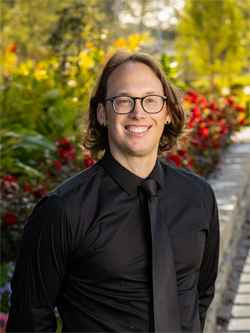
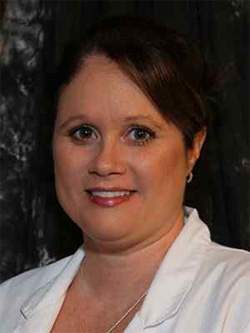
Brandy Jackson

Brandy Jackson, Undergraduate Program Director/Assistant Educator – Ascension Via Christi – Wichita State University School of Nursing, published “Disability and Accommodation Use in US Bachelor of Science in Nursing Programs” in JAMA Network Open Feb. 20.

Abstract: Introduction: Medical associations’ commitment to advancing disability-inclusive practices has led to data collection on, and a significant increase in representation of, medical students with disabilities.1,2 However, information on disability representation and accommodation use in US nursing programs remains scarce. The lack of data collection on this population impedes the ability to identify barriers, benchmark, and measure progress. To address this gap, we quantified disabilities and types of accommodations used among traditional prelicensure nursing students in US Bachelor of Science in Nursing (BSN) degree programs. Methods: This exploratory cross-sectional study, conducted from April 1 through July 30, 2024, used national data from nursing schools to examine disability and accommodation use in traditional prelicensure BSN programs. Participants were recruited through convenience and snowball sampling from social media, American Association of Colleges of Nursing (AACN) listservs, and the AACN newsletter. US traditional prelicensure BSN programs accredited by the Commission on Collegiate Nursing Education were eligible. Postlicensure and accelerated BSN programs were ineligible. The study was exempted and no consent was required by the University of Michigan institutional review board because we collected aggregate data that belong to the institution. We followed the STROBE reporting guideline. Questionnaires from previous works of the senior author (L.M.M.)1 -3 were adapted from medical to nursing education (eMethods in Supplement 1). The nursing questionnaire collected data on the number of students with disabilities registered with their school’s disability services office by disability category and approved accommodations. Program characteristics, including size, geographic location, private or public designation, and structure of the disability office, were also collected. Schools’ disability resource professionals completed the questionnaire. Descriptive statistics were used to summarize survey results. To account for heterogeneity between schools, random-effects logistic regression models were used to calculate pooled estimates (weighted by sample size) of disability proportions along with 2-sided 95% CIs. Analyses were conducted using R statistical software, version 4.4.1 (R Project for Statistical Computing).

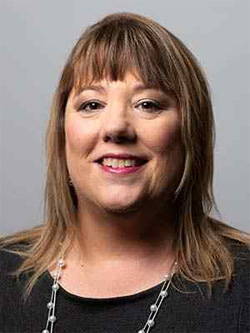
Dr. Erin O'Bryan

Erin O’Bryan, Assistant Professor in the Department of Communication Sciences and Disorders, published “Person-Centered Stories on the Main Stage in Intervention: Case Examples From the My Story Project, Aphasia! This Is Our World, and Aphasia-Friendly Reading” in American Speech-Language-Hearing Association (AHSA Wire) April 1.

Abstract: Purpose: Researchers working in the Life Participation Approach to Aphasia (LPAA) framework are beginning to recognize the value of supportive co-constructed storytelling for people with aphasia. Supported storytelling facilitates identity reconstruction that is part of rehabilitation as defined in the LPAA and the Living with Aphasia: Framework for Outcome Measurement. This clinical focus article reviews the therapeutic value of using co-constructed storytelling in clinical practice and describes how this was done in the My Story Project, Aphasia! This Is Our World, and Aphasia-Friendly Reading. These projects used co-constructed storytelling in intervention with people with aphasia in university and support group settings. Three case examples are presented, including sample therapy goals and documentation. Co-constructed person-centered storytelling has been used in clinical projects and has been shown to have immense value in rehabilitation for improving quality of life for people with aphasia. Conclusions: Co-constructed stories can provide a powerful opportunity for targeting life participation, identity, and environmental factors, while simultaneously targeting language. Clinicians are encouraged to consider incorporating the use of co-constructed person-centered storytelling in clinical practice. Guidance is offered for preparing for storytelling intervention sessions and documenting these sessions as billable, skilled services.

Imran Musaji

Dr. Imran Musaji, Assistant Professor in the Department of Communication Sciences and Disorders, published “Our CSD Legacy of Advocacy, and Why We Need to Be More Engaged Than Ever” in LeaderLive, online journal of American Speech-Language-Hearing Association March 5.

Abstract: The communication sciences and disorders professions have a long history of actively pushing the passage of legislation to support people with disabilities.

Imran Musaji and Erin O’Bryan, Assistant Professors in the Department of Communication Sciences and Disorders; and Aaron Bowen, associate professor and instruction and research services librarian in University Libraries, published “Approaches to Training Speech-Language Pathologists to Work With People With Aphasia: A Systematic Review” in American Journal of Speech-Language Pathology May 6.

Abstract: Purpose: The aim of this systematic review was to analyze the published research on training approaches for preparing current and future speech-language pathologists (SLPs) to work effectively with people with aphasia (PWA). The review addresses key questions regarding the described training approaches, their key features, research quality, and efficacy. Method: The review was conducted in accordance with Preferred Reporting Items for Systematic Reviews and Meta-Analyses guidelines and registered with International Prospective Register of Systematic Reviews (CRD42024453742). The literature search spanned nine databases. Eligibility criteria included peer-reviewed publications in English that reported on training programs involving current or future SLPs working with PWA. Studies were assessed for research quality using the American Speech-Language-Hearing Association’s (ASHA’s) levels of evidence framework. Narrative synthesis was used to identify key features in the training programs. Results: A total of 920 citations were identified, with 50 studies meeting the inclusion criteria for analysis. Included studies represented a broad range of training approaches, research designs, and research quality. The 50 studies fell into ASHA levels of evidence Ib, IIa, IIb, III, and IV. Statistical meta-analysis was not possible because of variability in research design and outcome measures, but the studies revealed statistically significant findings relevant to the question of what makes training effective for preparing clinicians to work with people with aphasia. Conclusions: The current literature related to training of clinicians to work with PWA is heterogeneous in approach, outcome metrics, and methodological quality. There is evidence supporting several recommendations for training clinicians including integrating direct interactions with PWA during training, combining didactic and experiential learning, and incorporating reflective practices. Overall, the review highlights the need for well-described evidence-based training standards for speech-language pathology students working with PWA. Future research should aim to develop and validate comprehensive training guidelines to improve care quality for individuals with aphasia.

Dr. Justin Smith, Assistant Professor in the Department of Physical Therapy, published “Building Intergenerational Relationships With Older Adults” in American Physical Therapy Association (APTA) Magazine May 1.

Abstract: Article highlights the partnership between the PT Department and Larksfield Place.

Black and white headshot of a white woman wearing glasses, a dark sweater, and with a bob haircut

Mia Ocean, Associate Professor in the School of Social Work, published “Anti-Oppressive Critical Participatory Action Research and Ethics in US Postsecondary Education” in Critical Participatory Action Research in Higher Education Aug. 26.

Abstract: Anti-oppressive Critical Participatory Action Research is a strengths-based, growth oriented, and capabilities-focused epistemology. Anti-oppressive Critical Participatory Action Research coalitions prioritize power-sharing, relationships, and populations that society attempts to marginalize. Being an anti-oppressive researcher signals a professional and personal commitment to participants and communities and an undertaking to challenge traditional research processes and outcomes that reproduce societal inequities. Anti-oppressive Critical Participatory Action Research is an opportunity to engage in lifelong learning and equity-focused change. In this chapter, the mindset needed to conduct anti-oppressive Critical Participatory Action Research is described, terminology is defined, and several research approaches are explored. The chapter concludes by amplifying a handful of specific capabilities that can be advanced iteratively over time in Critical Participatory Action Research efforts.

Sun Young Lee, associate Professor in the School of Education, published “Transpacific Curriculum History: Undoing the Citational Practice of Global Whiteness in Education Reforms” in Harvard Educational Review Feb. 21.

Abstract: In this article, Sun Young Lee presents a critical analysis of global whiteness, explicating how citational practices rooted in white-centric perspectives perpetuate epistemic coloniality in education reforms. Drawing on critical transpacific studies and critical whiteness studies, this study problematizes US educational imperialism for reinforcing global whiteness through universalized configuration of educational theories. To challenge its continuity, Lee first historicizes the paradoxical outcomes of postcolonial education reforms in South Korea, which aimed to counter Japanese imperialism but inadvertently reimperialized the systems of educational knowledge with US-centric epistemes. Lee then specifies how citational practices on US-centric progressivism, including John Dewey’s theories, have shaped the epistemic possibilities for new education initiatives in South Korea. Pointing out the white-centric racialized origins in progressive ideas, Lee engages in historicizing as a critical methodology to reevaluate the humanitarian ideals of national education as embodying globally mobilized white-centric norms. The article concludes by calling for transpacific studies in education research, emphasizing both deconstruction and reconstruction of epistemic possibilities through reimagined global interconnectivity and nonlinear temporality toward equitable futures of educational change.

Jeff Hayton, Associate Professor in the Department of History, published “The Path of Gratitude: East German Climbers in North Korea’s Diamond Mountains” in German Studies Review May 1.

Abstract: This article investigates the origins, course, and experiences of two East German mountaineering expeditions to North Korea in the 1980s. Examining how expedition members understood and processed their encounters with socialism in the Far East, it explores how their experiences with time and space as well as dictatorship and modernity in North Korea led them to ponder the nature and future of state socialism back home in the German Democratic Republic.

Rhonda Williams

Rhonda Williams, RN-BSN Program Coordinator and Teaching Professor – Ascension Via Christi – Wichita State University School of Nursing, published “Transforming RN-Baccalaureate Education Using Insights From a National Faculty Needs Assessment” in Nurse Educator May 1.

Abstract: Background: The recent American Association of Colleges of Nursing (AACN) Essentials revision emphasizes direct clinical experiences across 4 spheres of care in RN-Baccalaureate (RN-B) education, creating challenges for online, asynchronous programs. Differentiating between prelicensure and postlicensure education complicates the integration of these requirements. Understanding RN-B faculty needs is critical for curricular transformation. Purpose: This needs assessment examines challenges faced by RN-B faculty in integrating the AACN Essentials into nursing curricula and provides resources critical for the transition to them. Methods: A web-based needs assessment was conducted with RN-B faculty across the United States. It included a demographic questionnaire, 5 quantitative questions, and 3 qualitative items. Results: The assessment revealed a need for enhanced academic support, resources, communication, and collaboration to facilitate implementation. Conclusion: This article offers insights, recommendations, and resources for RN-B faculty engaged in curricular transformation, emphasizing targeted support for adopting the AACN Essentials. Keywords: NCLEX crosswalk; completion program for registered nurses; curricular change; educational pathway.

Dr. Rhonda Williams, Dr. Stephanie Nicks; Theresa Cooper, Candace Grant, Terri Core, Brandy Jackson, Dorene Owen, Mary Faragher, faculty members in the Ascension Via Christi – Wichita State University School of Nursing, published “Cracking the Code: Admission Criteria and Predictors of Success in Nursing Programs” in Kansas Nurse April 21.

Abstract: This study investigated the effectiveness of traditional admission criteria in predicting first-semester success in prelicensure nursing programs. With increasing attention to fairness and accessibility in higher education, nursing programs must reassess the reliance on standardized tests and science grade point averages (GPA) to identify accurate predictors of student success.