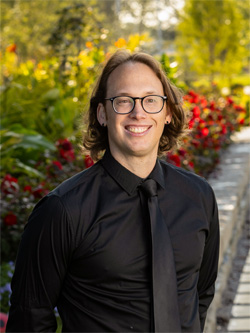
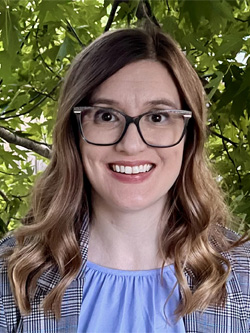
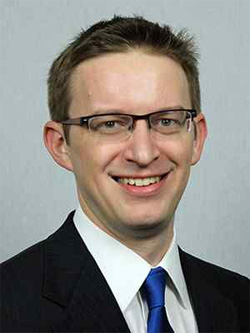
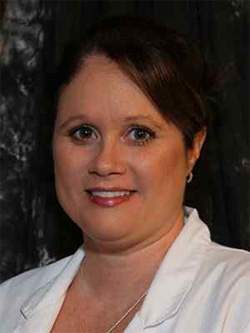
Brent Ehresman and B.J. Lehecka

Dr. Brent Ehresman, assistant director of clinical education and assistant teaching professor; and Dr. B.J. Lehecka, professor; in the Department of Physical Therapy, published “Improved Hip Flexibility and Gluteal Functioning Following a Daily Lunge-and-Reach Stretching Intervention” in International Journal of Sports Physical Therapy June 1.

Abstract: Background: A sedentary lifestyle contributes to hip flexor tightness. Some evidence suggests that tight hip flexors may contribute to impairments in gluteal function. Purpose: The purpose of this study was to determine the effects of a daily lunge-and-reach stretching program on hip flexor length and gluteus maximus strength, power, and endurance in healthy college-aged adults. Study Design: Cohort Study. Methods: Twenty-three participants with hip flexor tightness (15 females, 8 males; average age 24.0 ± 2.58 years) totaling 46 limbs were tested. Twelve participants were randomly assigned to the experimental group, while the remaining eleven were placed in the control group. Hip flexor length was measured with the Modified Thomas Test using an inclinometer. Gluteal power was measured on each lower extremity using a single-leg broad jump for distance with a tape measure. Gluteal strength was measured with prone hip extension using a handheld dynamometer and luggage scale. Gluteal endurance was measured with a single-leg bridge using a stopwatch. Participants in the intervention group performed five minutes of a lunge-and-reach stretch daily for six weeks. Results: Statistically significant changes were found for the Modified Thomas Test (mean change 5.92 ± 3.73 deg, p=0.01) and single-leg broad jump for distance (mean change 12.39 ± 11.23 cm, p=0.02) for the intervention group. No significant change was found for gluteal strength or single-leg bridge endurance (p=0.23 and p=0.26, respectively) for the intervention group. All measurements demonstrated high reliability (ICC=0.92-0.99). Conclusion: These results suggest that the lunge-and-reach stretch can be used to improve hip flexor length and gluteal power in a young, healthy population. Clinicians, coaches, and athletes may find these improvements beneficial for rehabilitation or performance.

Justin Smith

Dr. Justin Smith, Assistant Professor in the Department of Physical Therapy, published “The effectiveness of a geriatric simulation suit for improving empathy and simulating the aging process for older adults in a DPT program: A pilot study” in Gerontology & Geriatrics Education June 4.

Abstract: Enhancing empathy toward older adults among physical therapy students is essential to prepare graduates to be equipped to properly treat geriatric patients in all types of healthcare settings. This pilot study evaluated the effectiveness of a homemade geriatric suit to simulate an older adult and improve empathy among physical therapy students. The Jefferson Scale of Empathy for Health Professions student version was utilized to measure empathy-related parameters before and after the geriatric simulation experience. Physical and cognitive performance tests were used to assess the effectiveness of the geriatric suit to simulate typical age-related changes in physical and cognitive performance. Additionally, sociodemographic data were collected such as age, gender and prior experience working with older adults. Following the geriatric simulation suit experience, participants did not demonstrate statistically significant post-intervention empathy scores on the Jefferson Empathy Scale (t = 2.09, p = 0.022). However, patients did demonstrate similar physical scores when compared with older adult norms while wearing the geriatric simulation suit. The geriatric simulation suit experience effectively simulated the aging process, but did not significantly increase empathy in students. The homemade geriatric simulation suit may be a feasible and cost-effective way to simulate typical age-related physical changes in older adults.

Karissa Marble-Flint

Dr. Karissa Marble-Flint, Associate Professor and MA CSD (SLP) Program Coordinator in the Department of Communication Sciences and Disorders, published “Turning the Page: Midwest SLPs’ Lived Experiences Providing Literacy Services in Schools” in Seminars in Speech and Language June 5.

Abstract: School-based speech-language pathologists (SLPs) from four midwestern states were surveyed about their knowledge and confidence regarding literacy intervention. To obtain accounts of lived experiences, SLPs who completed the survey were invited to a follow-up interview. Fourteen SLPs completed interviews with a member of the research team via a recorded Zoom meeting. The interviews were approximately an hour long and each question was presented on a shared screen. Interview data were transcribed and then analyzed using thematic analysis. Five overarching themes emerged: (1) SLPs are responsible for language services to support student literacy; (2) barriers of time, administrator knowledge, and instructional tools that support SLP literacy instruction; (3) collaboration and training would improve confidence; (4) how multi-tiered systems of support and Title I impact SLP literacy services; and (5) the role of other team members in literacy services. Overall, SLPs know that they can play an important role in literacy assessment and intervention but are unsure of how their specific skills fit into the greater school context. Training may improve confidence in serving students with literacy needs differently from other service providers. Future work could explore partnerships between SLPs and other professionals to best serve students with literacy needs.

Collaborators: Dr. Amy Peterson, Dr. Klaire Brumbaugh and Dr. Whitney Schneider-Cline.

Benjamin-Kirby

Dr. Benjamin Kirby, Associate Professor and Undergraduate Program Coordinator in the Department of Communication Sciences and Disorders, published “Psychoacoustic assessment of misophonia” in the Journal of the Acoustical Society of America on Sept. 9, 2025.

Abstract: Misophonia is a condition characterized by intense negative emotional reactions to trigger sounds and related stimuli. In this study, adult listeners (N = 15) with a self-reported history of misophonia symptoms and a control group without misophonia (N = 15) completed listening judgements of recorded misophonia trigger stimuli using a standard scale. Participants also completed an established questionnaire of misophonia symptoms, the Misophonia Questionnaire (MQ). Summed scores of the listening task were significantly correlated with overall MQ score. The misophonia group had significantly higher listening scores and MQ scores compared to controls. These findings indicate applications for psychoacoustic methods in the assessment of misophonia.

Christopher Leonard, Director of Counseling and Psychological Services, published “How to Start Your Career With a Boss Who Mentors: Recommendations for Success” in Eye on Psi Chi Sept. 15.

Abstract: Although your first boss should not “make-or-break” your career, a good boss will send you on the right trajectory. The transition from working a job or internship to starting a career in psychology can be exciting but intimidating. As a clinical supervisor of over 10 years and an early career master’s level therapist, we have experienced firsthand the positive benefits of having a boss who is a mentor during this transition. Therefore, we believe having a supportive first boss who will help you achieve multiple early career goals is essential. A mentoring boss can also help you get onto the right path for achieving your long-term goals and ensure a smooth entrance and transition to advanced practice in your field.

Masud Chand and Gery Markova, Professors in the Department of Management, published “Demographic Change in High-Income East Asian Economies – Implications for Human Resource Management” in Thunderbird International Business Review May 21.

Abstract: The industrialized high-income economies of East Asia – Japan, South Korea, and Taiwan – are some of the most rapidly aging in the world. We examine the changing demographics of these economies and analyze how organizations can best manage the transition to a workforce that is rapidly aging and beginning to shrink. We synthesize from different sources an overview of the aging situation, explain how it affects businesses, and provide cases of organizations that have implemented human resource policies to make their workplaces more inclusive and supportive of older employees. Government efforts to promote active aging, family-friendly regulations, higher birth rates, and create more open immigration policies to attract talent are also briefly discussed. We point out some steps that organizations can take to better integrate older workers and provide insights for managers and policy makers to deal with emerging issues.

Scott Hill, Assistant Teaching Professor in Department of Philosophy, published “Why people who believe in God fear death” in Analysis July 28.

Abstract: People who report believing in God fear death. They also experience grief when someone they love dies. Philosophers and social scientists sometimes claim that this can only be plausibly explained by the hypothesis that people who claim to believe in God do not really believe in God. I show that this is mistaken. I identify three independently plausible explanations of why people who genuinely believe in God would have these behaviours and attitudes. First, there is an evolutionary explanation of why a fear of death would be resilient even if one genuinely believes God has good things in store for us after death. Second, people often fear low-probability outcomes. It may be that religious people are afraid of hell or the cessation of existence even if they judge those outcomes to have a low probability. Third, belief in God is typically combined with views according to which death is accompanied by the permanent loss and radical transformation of important relationships.

Dr. Carolyn M. Shaw, Professor in the Department of Political Science, published the book chapter “Simulating International Organizations” in “Teaching International Organizations” by Kent Kille, ed. Feb. 20.

Abstract: Using simulations in a class on international organizations is a wonderful way to provide students with a hands-on experience and to deepen their engagement. Taking on different roles through simulations can be exciting for students. Another benefit stems from the availability of artificial intelligence tools that are changing learning, so incorporating role play exercises gives students a genuine experience and instructors can be confident the students are responsible for their own learning. With so many design possibilities, determining the first steps for incorporating simulations in the classroom can be difficult. The chapter begins by addressing the basic aspects to consider before introducing a simulation in class before highlighting some of the ‘out-of-the-box’ possibilities for incorporating simulations and taking a deeper dive into how instructors can design customized simulations. The chapter concludes with a discussion of how to integrate this experiential learning through debriefing and assessment.

A multi-disciplinary group of faculty published “Leadership Academy: Fostering Honors Faculty Growth through Peer-to-Peer Learning” in National Collegiate Honors Council- Monograph Series entitled “Where Honors Education and Faculty Development Meet” on July 16, 2025.

The group of faculty:

  • Chelsea Redger-Marquardt, assistant dean, Cohen Honors College and assistant professor in the Department of Sport and Leadership Studies
  • Doug Stucky, director and assistant dean of the College of Innovation and Design
  • Cindi Mason, associate teaching professor and undergraduate coordinator of the Department of Industrial, Systems and Manufacturing Engineering
  • Bobby Berry, assistant dean for students and strategic initiatives, College of Applied Studies and assistant professor in the Department of Sport and Leadership Studies
  • Samantha Gregus, director of clinical training and associate professor in the Department of Psychology
  • Kimberly Engber, dean, Cohen Honors College and associate professor, English

Abstract: Developing leadership experiences around multi-disciplinary academic content and application was one of the elements of an honors college vision articulated on our campus ten years ago. We outlined the anticipated benefits for students. We did not anticipate what a significant impact this model would have on faculty growth. Now beginning its fourth year and called “Lead for Tomorrow,” the Cohen Honors Leadership Academy builds a multi-layered intellectual community each year. A team of faculty thought leaders from multiple disciplines meets to design a course plan consisting of a theme, community partnerships, discipline-specific content, and design-thinking projects. The academy culminates in a multi-day trip outside of our region that is structured by Place-as-Text methodology and that informs final student group presentations to community partners. The multidisciplinary faculty team builds the first layer of the community. Honors students from a diversity of academic majors, experiences and perspectives apply to participate in the academy and add the second layer. Community non-profit organizations add a third layer by posing a wicked problem to students.

Since the academy’s inception, the faculty thought leaders have engaged in student-centered teaching including flipped classroom methods and modifying course content responsive to student interest. Each faculty member initially identifies skills, tools, and key concepts from their academic fields that are relevant to the course theme. Faculty then become students by attending class sessions led by other faculty. Beyond modeling the power of dialogue across fields to understand and solve complex problems, this environment quickly created a parallel learning community among the faculty. Teaching on the same topic taught faculty different perspectives, and each instructor’s unique way of delivering the material impacted the faculty team’s overall teaching effectiveness. Faculty also learn directly from community partners in real time about the skills they seek from our college graduates. To continue to develop this course experience, members of the faculty team have engaged with university-wide teaching and learning programs including the service-learning scholars program coordinated by faculty directors and a faculty working group developing best practices for ePortfolios. An interpretative qualitative approach allows for a thematic analysis of retrospective faculty narratives from the 3 years of academy implementation. Further, an outside observer and leader of the honors college serves as an additional debriefer in the research process.

As part of a larger research study, it became apparent to the research team that examining their teaching and learning as a result of continued engagement with this dynamic team-teaching environment would yield a deeper understanding of the effectiveness of their teaching practices. Drawing on many research studies and practices within the Scholarship of Teaching and Learning (SoTL), the practitioners serve as both the instructors and the researchers for this study (Chick, 2018). Thematic findings of faculty lessons learned, de-siloed partnerships, and innovative community partnerships will be shared. Further, the interdisciplinary team-taught leadership academy model will be offered for discussion for other institutions. Implications for honors practitioners and ideas for collaborative programs and course design are included.


Rhonda Williams

Rhonda Williams, RN-BSN program Coordinator and Teaching Professor – Ascension Via Christi – Wichita State University School of Nursing, published “National RN to Baccalaureate Faculty Forum. (2025). National RN-Baccalaureate Faculty Forum position statement. N. Heywood & R. Williams (Eds.)” in American Association of Colleges of Nursing, Essentials Curriculum Mapping Tools Aug. 1.

Abstract: The National RN-Baccalaureate Faculty Forum (NRFF) recognizes the significance of The Essentials: Core Competencies for Professional Nursing Education (American Association of Colleges of Nursing [AACN], 2021a). The Essentials document guides the concepts, domains, competencies, and spheres of care that RN to Baccalaureate (RN to B) programs must include in their curricula. The NRFF reaffirms that RN to B programs build upon the introductory knowledge, skills, and abilities that are verified through an earned diploma or associate degree in nursing from an accredited/state board-approved program, successful completion of NCLEXRN®, and subsequent RN licensure by a state board of nursing or other nursing regulatory body. The NRFF proposes that RN to B programs continue to reinforce, scaffold, and further develop the knowledge, skills, and abilities measured through the above three components while meeting all competencies outlined in the Essentials (AACN, 2021a).