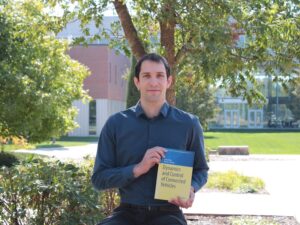
Dr. Tamás Molnár holding his book, "Dynamics and Control of Connected Vehicles"

Tamás Molnár, assistant professor in the Department of Mechanical Engineering within the College of Engineering, co-published the book, “Dynamics and Control of Connected Vehicles.”

Description: Dr. Tamás Molnár, an assistant professor in the Department of Mechanical Engineering within the College of Engineering, co-authored a book with Dr. Gábor Orosz of the University of Michigan, “Dynamics and Control of Connected Vehicles.” The book discusses the dynamics, stability and control of connected vehicles, including the analysis of human driver behavior, the design of controllers regulating the motions of connected and automated vehicles, and discussions on how vehicle networks and traffic flows are influenced by automation and connectivity — both through mathematical description and experiments on real vehicles. Dr. Molnár pursues research on how to control the motions of connected and automated vehicles in a safe and efficient way.

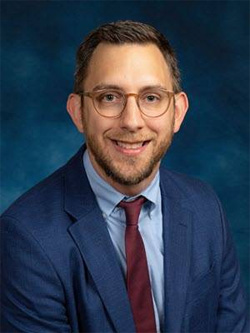
Dr. Kirby and Alaina Cunningham

Dr. Benjamin Kirby, associate professor, and Alaina Cunningham, second year audiology student, in the Department of Communication Sciences and Disorders, published “Psychoacoustic assessment of misophonia” in JASA Express Letters on Sept. 9, 2025.

Abstract: Misophonia is a condition characterized by intense negative emotional reactions to trigger sounds and related stimuli. In this study, adult listeners (N = 15) with a self-reported history of misophonia symptoms and a control group without misophonia (N = 15) completed listening judgements of recorded misophonia trigger stimuli using a standard scale. Participants also completed an established questionnaire of misophonia symptoms, the Misophonia Questionnaire (MQ). Summed scores of the listening task were significantly correlated with overall MQ score. The misophonia group had significantly higher listening scores and MQ scores compared to controls. These findings indicate applications for psychoacoustic methods in the assessment of misophonia.

Jeff Hayton, Associate Professor in the Department of History, published “Socialist Subjectivities: Queering East Germany under Honecker, edited by Katharine White, Scott Harrison, and Jeff Hayton” in University of Michigan Press on May 1, 2025.

Abstract: Socialist Subjectivities works within the logics of queer time to reanimate East German subjectivities in the 1970s and 1980s beyond the narrative of the German Democratic Republic’s long march towards demise. While East Germany certainly ended in dissolution, not all East Germans experienced late socialism in a singular manner. Rather, even after a generation of building socialism, East Germans under Honecker continued to pursue a range of socialist presents and a multiplicity of socialist futures up to and beyond 1989. This edited volume utilizes queer temporalities to interrogate how individuals lived non-normative possibilities in a highly normative world.

Whether one was an apparatchik, artist, or alcoholic, the everyday interactions, experiences, and rituals of late socialism proved crucial to establishing the conditions around which subjecthood was constructed. Despite stereotypes of apathy and inertia, East Germans lent a considerable dynamism to their society, and by generating a cacophony of opinions and a heterogeneity of ideas, they constantly transformed state socialism. By foregrounding socialist subjects and the iterative nature of socialism during these decades, this volume paints a richer portrait of East Germany—one that illuminates how East Germans imagined their futures in a society whose collapse they could not foresee.

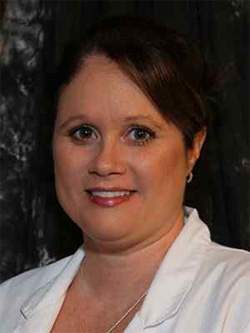
Rhonda Williams

Rhonda Williams, RN-BSN program coordinator and teaching professor in the Ascension Via Christi – Wichita State University School of Nursing, published “Transforming RN-Baccalaureate Education Using Insights From a National Faculty Needs Assessment” in Nurse Educator May 1.

Abstract: Background: The recent American Association of Colleges of Nursing (AACN) Essentials revision emphasizes direct clinical experiences across 4 spheres of care in RN-Baccalaureate (RN-B) education, creating challenges for online, asynchronous programs. Differentiating between prelicensure and postlicensure education complicates the integration of these requirements. Understanding RN-B faculty needs is critical for curricular transformation. Purpose: This needs assessment examines challenges faced by RN-B faculty in integrating the AACN Essentials into nursing curricula and provides resources critical for the transition to them. Methods: A web-based needs assessment was conducted with RN-B faculty across the United States. It included a demographic questionnaire, 5 quantitative questions, and 3 qualitative items. Results: The assessment revealed a need for enhanced academic support, resources, communication, and collaboration to facilitate implementation. Conclusion: This article offers insights, recommendations, and resources for RN-B faculty engaged in curricular transformation, emphasizing targeted support for adopting the AACN Essentials. Keywords: NCLEX crosswalk; completion program for registered nurses; curricular change; educational pathway.

Rhonda Williams

Rhonda Williams, RN-BSN program coordinator and teaching professor in the Ascension Via Christi – Wichita State University School of Nursing, published “National RN to Baccalaureate Faculty Forum. (2025). National RN-Baccalaureate Faculty Forum position statement. N. Heywood & R. Williams (Eds.)” in American Association of Colleges of Nursing, Essentials Curriculum Mapping Tools Aug. 1.

Abstract: The National RN-Baccalaureate Faculty Forum (NRFF) recognizes the significance of The Essentials: Core Competencies for Professional Nursing Education (American Association of Colleges of Nursing [AACN], 2021a). The Essentials document guides the concepts, domains, competencies, and spheres of care that RN to Baccalaureate (RN to B) programs must include in their curricula. The NRFF reaffirms that RN to B programs build upon the introductory knowledge, skills, and abilities that are verified through an earned diploma or associate degree in nursing from an accredited/state board-approved program, successful completion of NCLEXRN®, and subsequent RN licensure by a state board of nursing or other nursing regulatory body. The NRFF proposes that RN to B programs continue to reinforce, scaffold, and further develop the knowledge, skills, and abilities measured through the above three components while meeting all competencies outlined in the Essentials (AACN, 2021a).

Dr. Rhonda Williams, Dr. Stephanie Nicks; Theresa Cooper, Candace Grant, Terri Core, Brandy Jackson, Dorene Owen, Mary Faragher, faculty members in the Ascension Via Christi – Wichita State University School of Nursing, published “Cracking the Code: Admission Criteria and Predictors of Success in Nursing Programs” in Kansas Nurse April 21.

Abstract: This study investigated the effectiveness of traditional admission criteria in predicting first-semester success in prelicensure nursing programs. With increasing attention to fairness and accessibility in higher education, nursing programs must reassess the reliance on standardized tests and science grade point averages (GPA) to identify accurate predictors of student success.

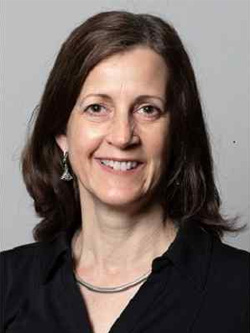
Brandy Jackson

Brandy Jackson, Undergraduate Program Director and Assistant Educator in the Ascension Via Christi – Wichita State University School of Nursing, published “Disability and Accommodation Use in US Bachelor of Science in Nursing Programs” in JAMA Network Open Feb. 20.

Abstract: Introduction: Medical associations’ commitment to advancing disability-inclusive practices has led to data collection on, and a significant increase in representation of, medical students with disabilities.1,2 However, information on disability representation and accommodation use in US nursing programs remains scarce. The lack of data collection on this population impedes the ability to identify barriers, benchmark, and measure progress. To address this gap, we quantified disabilities and types of accommodations used among traditional prelicensure nursing students in US Bachelor of Science in Nursing (BSN) degree programs. Methods: This exploratory cross-sectional study, conducted from April 1 through July 30, 2024, used national data from nursing schools to examine disability and accommodation use in traditional prelicensure BSN programs. Participants were recruited through convenience and snowball sampling from social media, American Association of Colleges of Nursing (AACN) listservs, and the AACN newsletter. US traditional prelicensure BSN programs accredited by the Commission on Collegiate Nursing Education were eligible. Postlicensure and accelerated BSN programs were ineligible. The study was exempted and no consent was required by the University of Michigan institutional review board because we collected aggregate data that belong to the institution. We followed the STROBE reporting guideline. Questionnaires from previous works of the senior author (L.M.M.)1 -3 were adapted from medical to nursing education (eMethods in Supplement 1). The nursing questionnaire collected data on the number of students with disabilities registered with their school’s disability services office by disability category and approved accommodations. Program characteristics, including size, geographic location, private or public designation, and structure of the disability office, were also collected. Schools’ disability resource professionals completed the questionnaire. Descriptive statistics were used to summarize survey results. To account for heterogeneity between schools, random-effects logistic regression models were used to calculate pooled estimates (weighted by sample size) of disability proportions along with 2-sided 95% CIs. Analyses were conducted using R statistical software, version 4.4.1 (R Project for Statistical Computing).

Evan Ohlman

Dr. Evan Ohlman, Department Chair and Program Director in the Department of Physician Associate, published “Resident-led seminar and workshop on airway management for physician assistant students: Evaluating efficacy and memory retention” in Journal of Physician Assistant Education Jan. 21.

Abstract: Introduction: Physician assistants (PAs) should understand the implications and risks involved with airway management. Our study aimed to facilitate PA students’ familiarity with airway management with instruction from anesthesiology residents. We assessed the students’ knowledge of airway management both before and after a seminar to see if knowledge was retained. Methods: Physician assistant students participated in a seminar (didactic lecture and a hands-on workshop) on airway management led by anesthesiology residents. The students took a true-false pretest and repeated the test following the seminar. After four months, the students repeated the same true-false test to assess retention. We used Friedman test to analyze differences between the pretest, posttest, and retention tests, as well as performed an itemized analysis on the questions. Results: The students showed a significant difference between the pretest and posttest ( P < 0.001) and between the pretest and retention test ( P = 0.006). Students performed better per question on the retention test compared with the pretest, except for a question related to an indication for intubation (Z score = -2.757; P = 0.006). Discussion: Our results demonstrated that educating PA students in airway management with anesthesia resident direction resulted in a statistically significant increase in their knowledge on the topic four months after the training. Interactive learning seems beneficial for gaining knowledge on the basic principles of airway management.

Stephen Lewia

Dr. Stephen Lewia, Assistant Professor and Director of Clinical Education in the Department of Physician Associate, published “Characteristics and career effect on PA graduates of a doctor of medical science program” in Journal of the American Academy of Physician Associates (JAAPA) Jan. 14.

Abstract: Objective: This study examined the characteristics and effect of a doctoral degree on career metrics of physician associate/assistant (PA) graduates. Methods: This was a comparative analysis study of doctor of medical science (DMSc) program graduates. Characteristics from this survey were compared with program data and the National Commission on Certification of Physician Assistants Statistical Profile of Board Certified PAs for 2022. Results: Graduates self-reported that the DMSc degree was beneficial for receiving raises, promotions, and new leadership positions. Conclusions: The DMSc degree was considered a positive career benefit by graduates.

Gina Brown

Gina Brown, Associate Professor in the Department of Physician Associate, published “A review of Prader-Willi syndrome” in Journal of American Academy of Physician Associates (JAAPA) Feb. 15.

Abstract: Prader-Willi syndrome is a rare and complex genetic disorder with multiple physical and behavioral characteristics, affecting endocrine, metabolic, and neurologic systems and producing a plethora of medical complications. Early identification and diagnosis are paramount to providing timely and appropriate interventions to improve patient outcomes. Treatment should focus on neonatal feeding and growth, followed by hormonal therapy for hypothalamic dysfunction, and should then be directed at the prevention and treatment of obesity and obesity-related complications. Effective treatment requires a comprehensive multidisciplinary approach.