Mark Dion

Come hear Mark Dion talk about art, museums and the hidden choices that shape what people think they know about the world at a talk from 6 to 7 p.m. Thursday, Dec. 3 in the Polk/Wilson Gallery at the Ulrich Museum of Art.

Dion makes museums, or rather, he remakes them. His installations look like museum displays: cabinet of curiosities, scientific collections and catalogues of the overlooked. But they are more than a collection of objects, they are a reflection on how institutions decide what is worth saving, what story gets told and what gets left out. The Ulrich holds Dion’s portfolio, “Museum Culture,” in the collection.

Join the Department of Chemistry and Biochemistry for its final seminar of the semester which will take place at 3:30 p.m. Wednesday, Nov. 18 in 224 McKinley Hall. The department is honored to host Professor David Miller from Oklahoma State University who will present a talk titled “Biocatalytic Oxa-Pictet-Spengler Reactions.”

The Department of Biomedical Engineering is honored to host a seminar at 2 p.m. Friday, Nov. 13 via Zoom by Dr. Vince Rossi, associate professor in the Department of Physics at Utah Valley University.

Zoom meeting ID: 913 1323 5761. Password: 492839.

The Department of Biomedical Engineering is honored to host a seminar at 2 p.m. Friday, Nov. 13 via Zoom by Dr. Vince Rossi, associate professor in the Department of Physics at Utah Valley University.

Zoom meeting ID: 913 1323 5761. Password: 492839.

Seminar abstract: “Cytometry (FC) was widely adopted across biological and medical laboratories by the 1980’s. In its first incarnation, FC was a scatter imaging system, using optically integrated Side (SSC) versus Forward Scattering Channels (FSC) to generate 2D heat maps to differentiate between cell populations. Improved differentiation between sample populations has grown since with the introduction of fluorescence channels into FC and via Imaging Flow Cytometry (IFC). Fourier Goniometric Flow Cytometry (FGFC) returns to the scattering fundamentals on which FC was developed. Instead of optically integrating FSC and SSC channels to single photodiodes, FGFC maps samples’ scatter functions to the Fourier plane, thereby maintaining angular resolution. The added angular resolutions serves as an additional parameter space that can be used to differentiate between sample populations. This presentation will cover the theoretical modeling and algorithm developed for improved differentiation between sample populations via FGFC over traditional scatter-based FC. FGFC system design will be covered, as well as the method of calibrating the angle space in the Fourier plane of the system. Proof-of-principle imaging of polystyrene microspheres will be included along with future directions for this work.”

You are invited to attend the alumni career panel on careers in public service from 2 to 3 p.m. Wednesday, Nov. 18 in 156C Corbin Education Center.

Curious about a career in public service? Join three Wichita State alumni who have turned their political science and leadership training into careers in local government, and hear how they got from campus to city hall. Come ask questions, get career advice, and connect with alumni who are putting their degrees to work for their communities.

  • Stacy Goss (’10) is communications director for Hutchinson Public Schools and represents the Northwest District on the Hutchinson City Council, where she has served as vice mayor and mayor. She has prioritized reinvesting in the city’s water infrastructure while working to attract new industry and support small businesses.
  • Dalton Glasscock (’17) is vice mayor of Wichita and represents District 4 on the Wichita City Council. A WSU graduate and former adjunct lecturer, his career spans political campaigns, strategic communications, state and local government, and international relations.
  • Breea Clark (’05) is a former mayor of Norman, Oklahoma, and now serves as the city’s international liaison and as director of the JCPenney Leadership Center at the University of Oklahoma. She earned her J.D. from the University of Oklahoma College of Law.

Join the physics department for its seminar at 2 p.m. Wednesday, Nov. 11 in 128 Jabara Hall. The guest speaker will be Brian Doty, graduate student of physics. The talk will be on “First results from the SNAPPY spacecraft, a stepping stone toward the future detection of neutrinos in space.”

On May 3, the SNAPPY CubeSat, a satellite prototype created at Wichita State, was launched into low space orbit by NASA.

The seminar series brings several speakers to WSU each semester and is funded by the Eddy and April Lucas Fund, Wichita.

Join the Department of Chemistry and Biochemistry for its penultimate weekly seminar of the semester which will take place at 3:30 p.m. Wednesday, Nov. 11 in 224 McKinley Hall. The department is honored to host Professor Francis D’Souza from the University of North Texas who will present a talk titled “Symmetry Breaking Electron Transfer for Maximum Conversion of Solar Energy.”

Join mathematics and statistics for a public lecture by Dr. Yousef Saad from University of Minnesota. The lecture, titled “Extrapolation and Acceleration Methods in Scientific Computing,” will take place at 3 p.m. Friday, Nov. 13 in 372 Jabara Hall.

Refreshments will be available at 2:30 p.m. in 371 Jabara Hall.

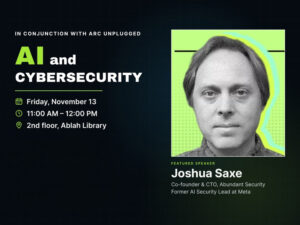
The image contains a picture of the seminar's speaker, details date:11/13, and location 2nd floor Ablah Library.

Attend a seminar, “AI Is Changing Cybersecurity Faster Than We Are,” with Joshua Saxe, co-founder and CTO of Abundant Security, from 11 a.m. to noon Friday, Nov. 13 on the second floor of Ablah Library, as he discusses AI uses for exploiting software vulnerabilities.

The talk will walk through what’s actually changed in AI, what it means for the software, hospitals, banks and infrastructure people depend on, and why the race between AI-powered attackers and defenders is the most important security story of the next decade. No technical background needed.

Before founding Abundant Security, Saxe led AI security work at Meta, including securing its Llama AI models. He was chief scientist at Sophos, served as principal investigator on DARPA research programs, and co-wrote the book “Malware Data Science.” He has presented at DEF CON, Black Hat, and RSA Conference, and The Washington Post recently featured his argument that we need to start treating AI agents as potential adversaries.

The seminar is sponsored by College of Engineering, FARE Office, Responsible AI, Office of Instructional Resources, Hub for Cybersecurity Education and Awareness, WuLUG and WiCyS.

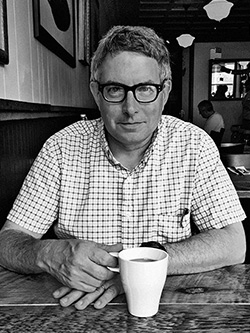
The Department of Biomedical Engineering is honored to host a seminar at 2 p.m. Friday, Nov. 6 via Zoom by Dr. Ed Damiano, research professor of biomedical engineering at Boston University and founder-CEO of Beta Bionics, Inc. and chairman of the board.

Zoom meeting ID: 941 4723 8874. Password: 045408.

Seminar abstract: “Twenty-six years ago, when my infant son was diagnosed with type 1 diabetes, I set my sights on building and integrating autonomous, intelligent systems into a purpose-built, wearable medical device that I referred to as a bionic pancreas. In 2021, a 13-week pivotal clinical trial was conducted that tested the iLet Bionic Pancreas in 440 adults and children with type 1 diabetes. The clinical data from that pivotal trial was published in the New England Journal of Medicine in 2022. Based in part on that data, the iLet Bionic Pancreas received clearance by the US Food and Drug Administration in May 2023. Since June 2023, the iLet has been commercially available for people six years and older with type 1 diabetes through commercial and government insurance across the US. Results from the pivotal clinical trial will be presented and compared with real-world results of the iLet during the first 18 and 24 months of commercial usage.”